Start with the best available source
A measured kWh value over a representative period is usually the strongest input. An official annual energy-label value is often best for refrigerators and other cycling appliances. Rated watts are useful for heaters, kettles, and simple resistive loads.
The maximum input printed on a nameplate is not always the average draw. Air conditioners, refrigerators, ovens, and pumps cycle or modulate, so runtime and duty cycle matter.
- Plug-in meter: best for plug-connected devices over a representative period.
- Energy label: strong for annual-kWh or per-cycle appliances.
- Manufacturer manual: useful for rated input and operating modes.
- Typical estimate: acceptable for discovery, but should carry lower confidence.
Copy one value. Ignore the look-alikes.
This BEE air-conditioner label contains several numbers, but only one directly states annual electricity use.
- 1Find “Electricity Consumption”
- 2Choose “Annual energy label”
- 3Enter 744.75
On Indian electricity labels, one unit means one kWh. Do not enter the 5,000 W cooling-capacity number as electrical input power.
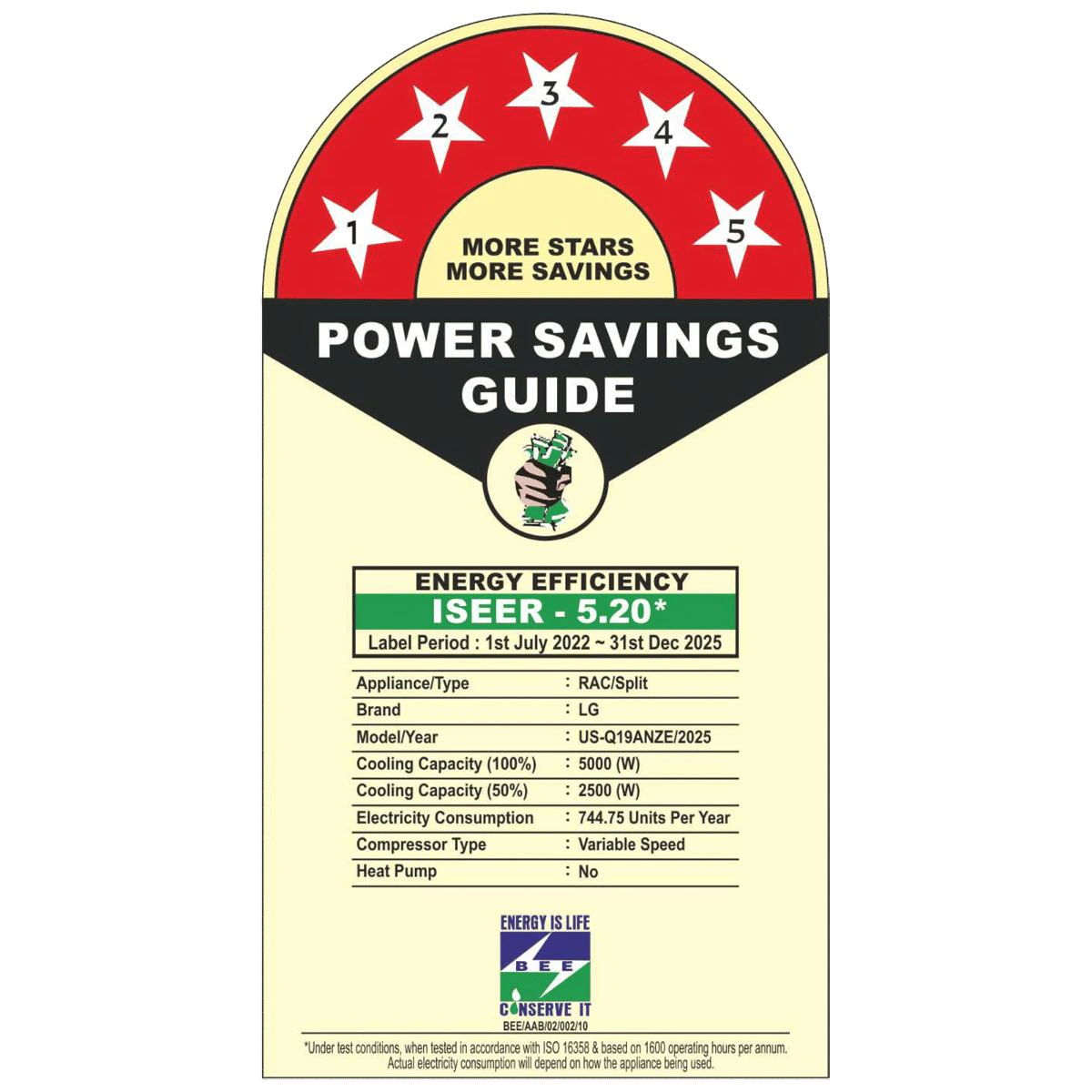
Electricity Consumption
This is already an annual estimate under the test conditions shown at the bottom of the label.
Cooling Capacity: 5,000 W
Cooling output is not electricity drawn from the socket. The “W” looks familiar, but this number does not belong in “Rated input power.”
5,000 W cooling capacity ≠ 5,000 W electrical inputUse the annual-label method in the AC calculator
Wattwise will calculate the daily, monthly, and yearly energy cost. You do not need to enter runtime, compressor load, or months used when using this annual-label method.
Open with 744.75 filled inWhat about ISEER and the five-star rating?
ISEER 5.20: use it to compare seasonal efficiency between ACs tested under the same standard. It is not watts, kWh, tariff, or a compressor-load percentage.
Five stars: use the rating only for product comparison. Rating scales can change, and this example’s label period ended on 31 December 2025.
Using the rated-power method instead? This label does not print rated electrical input. Find “input power,” “rated power,” or “power consumption” on the AC’s technical nameplate or manual. Never substitute cooling capacity.
Measure long enough
A television can be measured in one viewing session. A refrigerator needs at least a full day and preferably several normal days. Seasonal cooling and heating need weather context.
Use the meter during ordinary household use rather than an unusually quiet or busy day. Record the start and end time, operating mode, room temperature where relevant, and whether the appliance entered standby. Dividing measured kWh by the number of days gives a more defensible daily input than copying the highest wattage displayed during startup.
Convert nameplate information carefully
A label may show watts, amps, volts, volt-amperes, cooling capacity, or several operating modes. Watts can be used directly. If only amps and volts are shown, multiplying them gives volt-amperes, not necessarily real watts; motors and electronic power supplies can have a power factor below one. Use a documented input-watt value or a suitable meter when precision matters.
Cooling capacity expressed in BTU per hour or tonnes of refrigeration is not electrical input. An air conditioner also needs an efficiency value such as EER, CEER, COP, or seasonal energy performance before capacity can be converted into an electricity estimate.
Account for cycling and standby
Thermostats, compressors, pumps, and variable-speed drives do not draw their nameplate maximum continuously. For these appliances, use annual kWh, a measured session, or a realistic duty cycle. Keep active and standby time separate so a full day is not counted twice.
A low standby reading can still matter when multiplied across many devices and an entire year. Measure the stable standby state after displays, fans, or charging circuits have settled rather than immediately after switching the appliance off.
Record the evidence with the value
Save the source type, date, appliance model where known, market, operating mode, measurement duration, and any conversion performed. This context determines confidence and makes a later correction possible. A precise-looking number without provenance should not outrank a rounded value from an official label or representative measurement.
Common mistakes to avoid
Do not treat a fuse rating as normal power, convert cooling capacity directly to watts consumed, assume maximum input runs all day, or compare an annual label under one test standard with a household measurement under different conditions without explanation. Use the Wattwise calculator that matches the evidence: rated power, annual energy, per-cycle energy, or an appliance-specific model.
Use the value in a Wattwise calculator
Start with the closest appliance model, replace the preset with your measured or label value, and review the confidence and excluded charges before making a decision.
Browse appliance calculatorsOfficial references used in this guide
Label formats and bill terminology differ by market. Use the original source for your product or supplier when checking a number, then enter your own usage and electricity price.